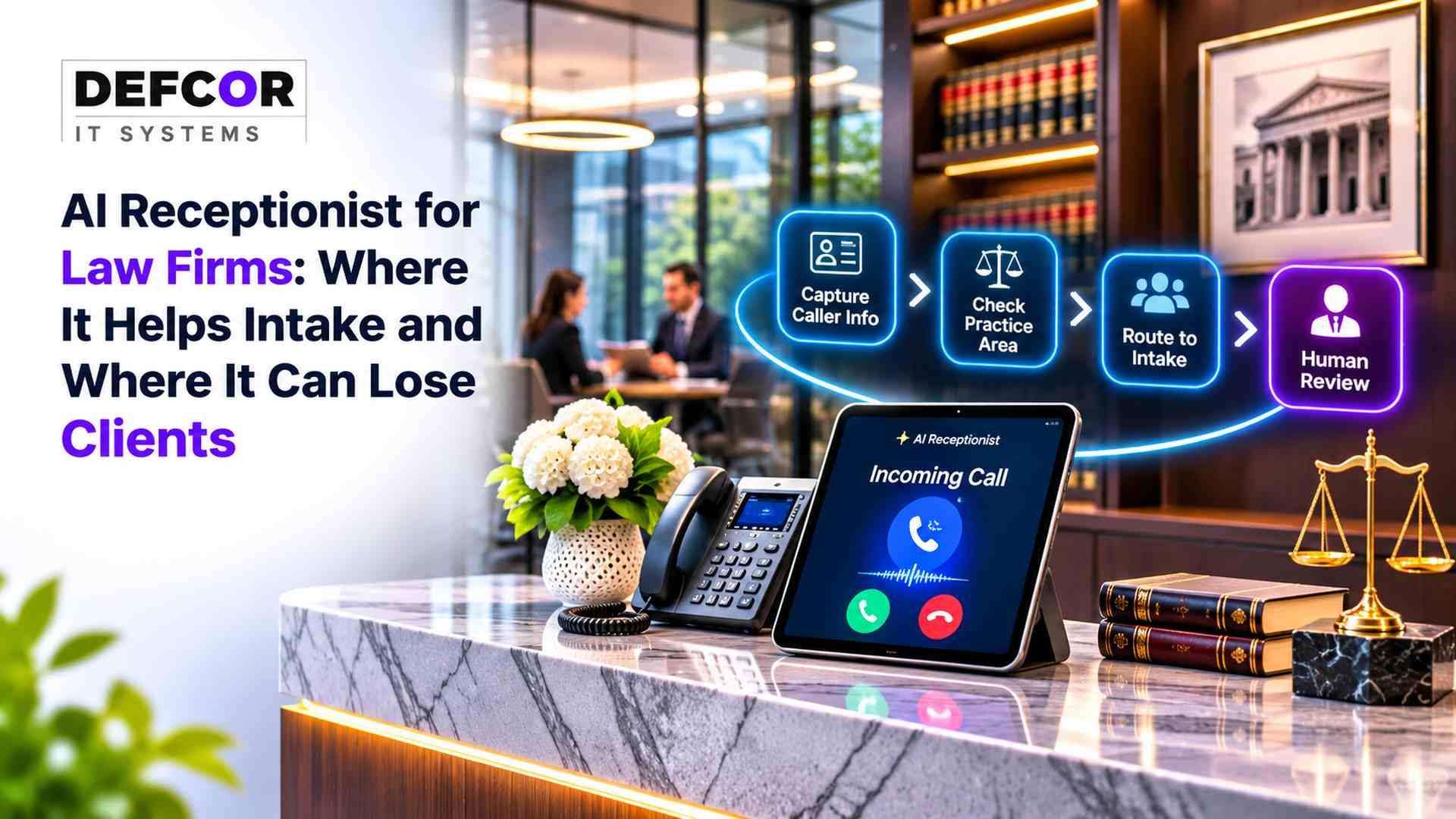
- 01.AI receptionists can support routine legal intake, message capture, approved scheduling, and after-hours coverage when the workflow has clear boundaries.
- 02.Legal advice, representation decisions, sensitive disclosures, unclear requests, and failed transfers need prompt human review.
- 03.Evaluate performance using usable intake records, completed handoffs, timely callbacks, correction work, and consultation outcomes - not answered calls alone.
Where AI Produces Useful Intake
Your call report shows more answered inquiries and a fuller consultation calendar. Yet intake staff are correcting names, callers are repeating their stories, and some appointments never happen. The dashboard looks healthier than the work behind it. Before expanding coverage, a law firm needs to know which conversations actually reach a useful next step.
For managing partners and intake managers, evaluating an AI receptionist for law firms means following calls beyond the greeting. Review what callers were told, what staff received, and what happened afterward. This article focuses on recognizing useful intake, finding the points where trust breaks down, and deciding whether to expand, narrow, or correct an existing workflow.
Routine administrative conversations give an AI receptionist for law firms a practical role. An AI answering service for law firms may greet callers, capture messages, answer approved office questions, and route requests. A useful review asks whether each action was accurate and appropriate. DEFCOR’s comparison of AI and human receptionists helps distinguish repeatable front desk work from conversations that require judgment.
Check the Message Staff Actually Receive
Read the intake record before listening to the corresponding call. Can an employee identify the caller, use the approved callback method, and understand the next action without reconstructing the conversation? Legal intake AI helps when a short record supports that work. Compare names and numbers with caller corrections where available. Check whether a shared phone was marked unsafe for voicemail. Extra detail offers little value when the callback goes to the wrong person.
Check What a Booking Really Means
A booked slot can conceal an intake failure. An AI receptionist for lawyers may schedule an approved consultation when permissions, availability, and firm rules support it. Compare the invitation with what the caller heard: intake call or attorney consultation, applicable fee, and any screening still required. An AI receptionist for law firms should never imply that scheduling establishes representation. Track cancellations caused by wrong practice areas or appointment types separately from unrelated changes in a caller’s plans.
Where Firms Can Lose the Caller
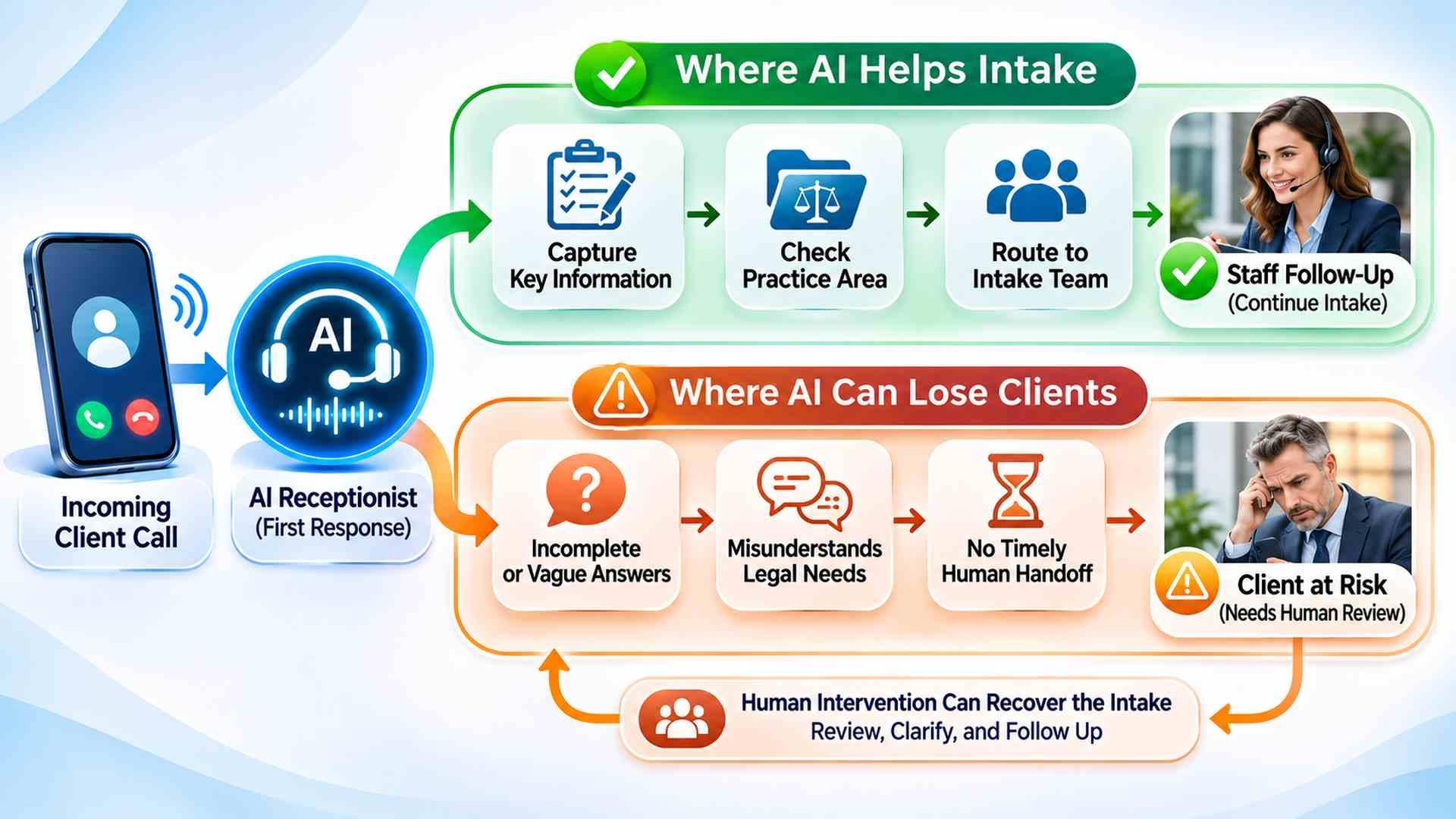
Review abandoned and redirected calls alongside successful ones. Listening only to completed conversations hides the people who could not get through the script. A caller may leave because of repetition, an unavailable person, or an unsuitable service. Those explanations require evidence from permitted call review or follow up; an abandoned call alone does not prove that AI lost a client.
Repeated Questions Turn Intake Into an Interrogation
Consider a hypothetical caller saying, “My mother died, and I need help with her property, but I do not know which service to request.” Repeating “Please select a legal category” turns intake into a test. “I can take a callback message for our intake team” offers a workable next step. An AI answering service for law firms needs to accept uncertainty. During review, flag repeated questions, interruptions, and requests for a person that went unanswered. Check that an approved staffed option or accessible alternative was actually available.
False Reassurance Creates the Wrong Expectation
Case value, filing deadlines, likely outcomes, and promises of representation belong outside the automated script. Search reviewed conversations for reassurance such as “you have plenty of time,” then examine its context. An AI receptionist for law firms should preserve a caller’s stated deadline for prompt review without calculating it or suggesting delay is safe. Legal intake AI needs approved wording that separates receipt of an inquiry from acceptance of a matter. Escalate departures from that wording for attorney review.
Follow the Handoff Until Someone Acts
Trace what the system labels a successful transfer. Did an authorized employee answer, receive enough context, and accept the next action? An after hours answering service for law firms provides call coverage, not automatic access to an attorney. Separate attempted transfers, completed connections, and tasks awaiting callback. A message reaching an inbox proves delivery to that inbox; it does not establish that anyone has reviewed it or taken responsibility.
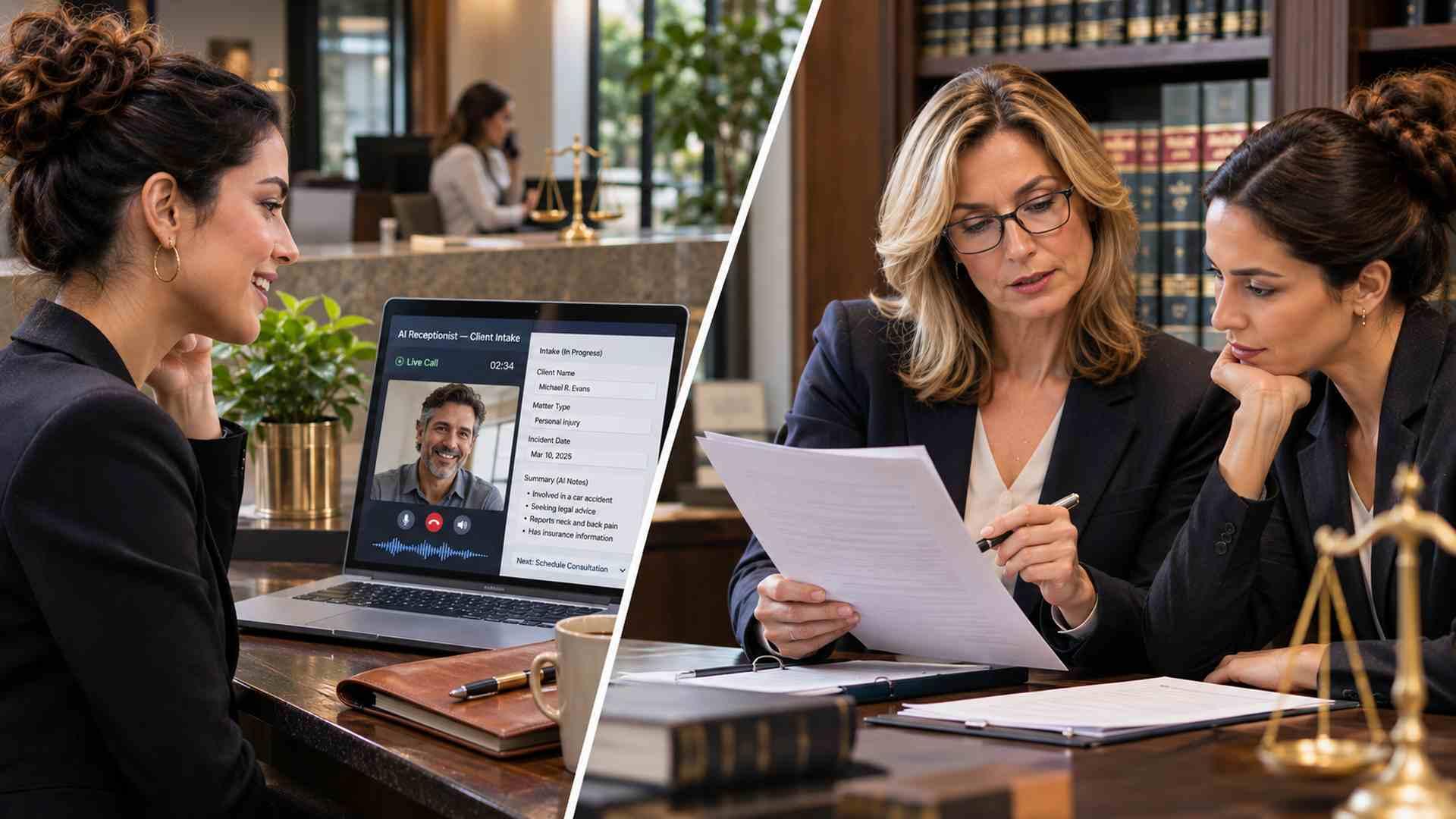
For immediate danger, use a lawyer-approved emergency script directing callers to appropriate emergency services. For other failed transfers, compare the actual outcome with the approved fallback: accurate availability, a safe callback method, a named owner, and an internal review deadline. An after hours answering service for law firms should explain when routine messages are reviewed. Evaluate an AI answering service for law firms against the whole sequence. If unanswered tasks accumulate, improving the greeting will not repair the follow-up process.
- Route requests for legal advice or an immediate attorney decision to an authorized person rather than extending automated questioning.
- Give distressed callers a short path to staff, with an alternative when a live transfer cannot be completed.
- Preserve caller-reported urgency and route it under approved rules without promising a response the firm cannot provide.
Review Sensitive Information Without Collecting More
Storage capacity is no reason to collect a full case history. Limit what an AI receptionist for lawyers requests before staff review. ABA Model Rule 1.18 addresses duties involving prospective clients even when representation does not follow; applicable state rules require separate review. Texas Ethics Opinion 705 also emphasizes understanding generative AI, protecting confidential information, and checking outputs. Lawyers responsible for the workflow should approve what the intake system collects, how that information is handled, and when the caller must be transferred to a person. A vendor’s general assurances do not replace that assessment.
Audit the information trail as well as the spoken script. A minimal intake form can coexist with a transcript that stores everything volunteered. Ask who can access recordings, how long they remain, whether inputs train models, and how deletion works. Include summaries copied into email or other applications. Have counsel approve review access, recording, transcription, disclosure, and consent practices for the jurisdictions involved. Identifying the system as AI does not settle every privacy obligation.
Find Errors Between the Call and the Record
A fluent conversation can end with a missing appointment or misfiled inquiry. Compare the spoken commitment with the intake record and calendar entry. DEFCOR’s AI receptionist services include message capture, scheduling, and human transfer; each firm’s workflow still needs testing. Compatibility depends on the platform, interfaces, permissions, and implementation. A feature described on a service page does not establish that a particular legal intake connection works correctly.
Check failed calendar writes, duplicate submissions, and incorrect routing as separate error types. A repeated inquiry may be a caller trying again after an unanswered request. Merge records carefully enough to preserve that history. Review category mismatches before treating them as disqualified leads, and leave conflict checks and acceptance decisions with authorized staff. Existing client calls also need their own route; supplying a name or claiming to be a relative should not unlock case information.
Decide Whether the Results Justify Expansion
Compare similar call types and coverage periods with the firm’s baseline. An AI receptionist for lawyers may improve routine coverage while increasing staff correction work. For each option, total the setup costs allocated to the comparison period, usage, integration maintenance, review, and corrections. Divide that amount by usable intake records. Apply the same period and record definition when comparing existing staff, voicemail, or a trained answering service. A cheaper subscription can still cost more per usable inquiry.
Define a usable record as confirmed callback details, required screening fields, and a named owner with a next action and review deadline. Divide usable records by eligible new inquiries, excluding spam and existing client calls consistently. Measure completed handoffs against requested transfers and timely callbacks against required callbacks. Then examine consultations attended and matters accepted after professional review. Compare rejection and cancellation reasons; changing case mix can alter results even when call handling stays the same.
Suppose a hypothetical pilot answers more inquiries while timely callbacks fall and record repairs increase. Keep coverage limited while correcting the bottleneck. An after hours answering service for law firms may simply shift unfinished work into the morning queue. Expansion makes sense only against criteria agreed before the pilot, reflecting the firm’s baseline and staffing capacity. Pause the affected workflow after unauthorized advice or a confidentiality incident and investigate. More appointments alone do not establish that automation produced more retained clients.
Ask DEFCOR to Show the Unfinished Work
When evaluating the workflow, bring anonymized examples of failed or incomplete calls to a DEFCOR demonstration. Its internal AI assistant implementation illustrates work with inbound calls and operational workflows, rather than measured law firm conversion results. Ask to follow a routine inquiry, a failed transfer, and an unavailable calendar through to their records. Each unresolved item needs a visible status, assigned employee, and review deadline. Use synthetic details when testing sensitive scenarios.
Conclusion
Expand an AI receptionist for law firms when the evidence shows callers reaching appropriate next steps with manageable staff review. If conversations work but callbacks stall, fix staffing or queue ownership. If callers struggle with the script, narrow the automated role and retest it. If records or bookings are wrong, repair the connection before adding volume. The useful decision comes from locating the failure, not treating every answered call as a win or every lost inquiry as a technology problem.
Frequently Asked Questions
Can an AI receptionist accept a legal case?
No. It can collect approved intake details, but representation decisions remain with authorized people at the firm.
Does answering after hours guarantee attorney access?
No. Availability depends on staffing and approved escalation arrangements.
What should firms measure beyond answered calls?
Track usable records, completed handoffs, timely callbacks, consultation attendance, and staff correction time.
When should a firm restrict automation?
Narrow its role when callers struggle, transfers fail, or records need repeated repairs. Pause affected workflows after unauthorized advice or confidentiality incidents and investigate before restarting. Retest the corrected process before expanding coverage.
Defcor Team
. Part of the Defcor engineering team that builds and manages autonomous AI phone agents, IT systems, and automation infrastructure across Texas.