
- 01.AI automation can capture inquiries, organize follow-up, and keep lead context in one place.
- 02.Lead qualification should prepare the agent, not replace professional judgment.
- 03.Reliable automation depends on accurate CRM data, clear rules, and human ownership of exceptions.
From first inquiry to a useful agent conversation
An agent is showing a home when another buyer asks about a listing through the website, then calls. The agent cannot answer, and the form sits in a separate inbox. Later, someone must recognize both requests came from the same person, check the listing, and decide who will respond. Without a shared record, the buyer may receive two conflicting replies or none at all.
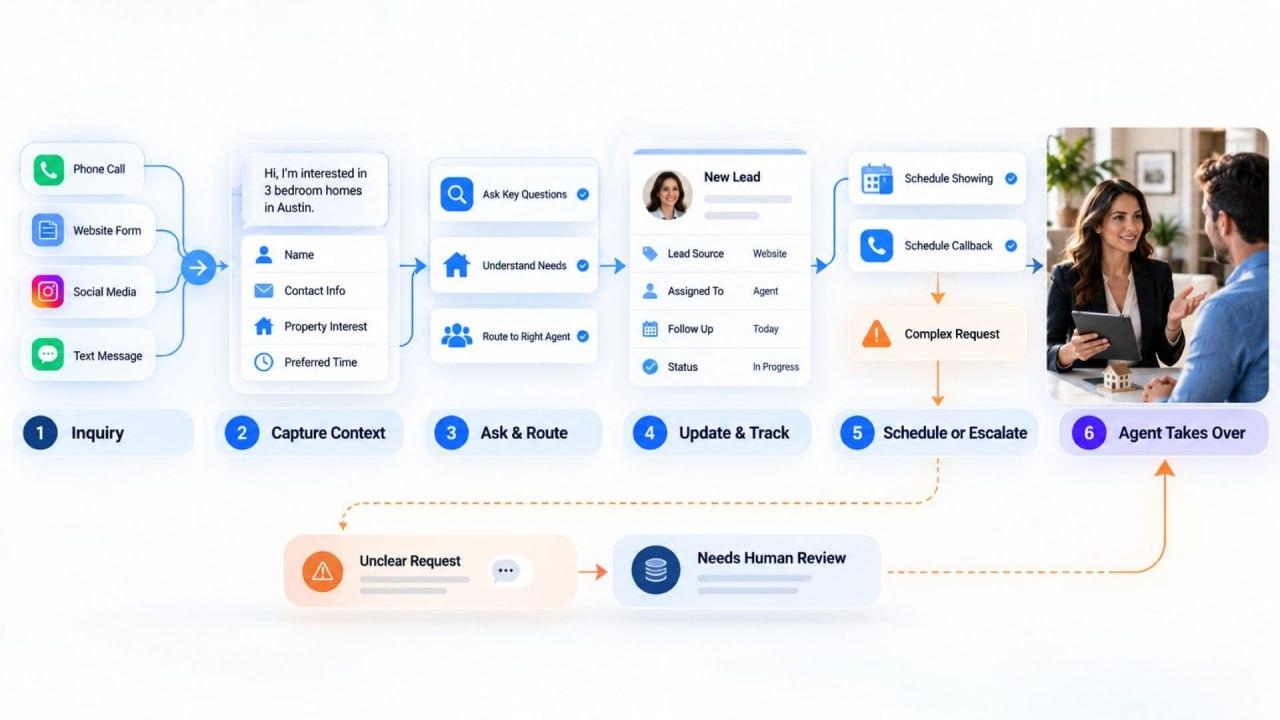
AI automation for real estate agents can help the team turn more of its existing inquiries into conversations by handling the routine steps between first contact and agent response. It can acknowledge the buyer’s question, gather a preferred callback time, and put that context in front of the right person. It does not generate buyer demand by itself, make the agent’s professional judgment, or substitute for the agent’s advice.
Property inquiries, seller requests, phone calls, and referrals arrive with different amounts of context. In the buyer’s case, the form contains a property reference while the later call adds a question about viewing it. A seller might instead give an address but no preferred time to talk. The workflow has to preserve the original request and recognize possible duplicates. Otherwise speed at the front end merely creates cleanup work for the person who follows up.
Respond once, then keep the next action visible
The buyer first needs to know the inquiry arrived. Real estate lead follow-up automation should then record the preferred callback window, create an owned task, and pause any generic reminders when the agent takes over. One reply confirms receipt; a follow-up sequence decides what should happen next based on the lead’s response. If the buyer asks for a call next week, the workflow should respect that request instead of sending repeated prompts today.
An agent or team leader still owns the cadence. The workflow needs explicit rules for which channels may be used, when reminders stop, who sees a failed delivery, and how an opt out is honored across connected tools. Real estate lead follow-up automation cannot make an unwanted message welcome. Review contact permissions and applicable communication rules before enabling outbound messages or calls, especially when a platform’s default settings do not reflect the team’s process.
DEFCOR’s guide to AI phone agents explains how a voice workflow can take routine calls and hand unusual conversations to a person. For a brokerage, that model can help with after hours intake, provided the caller knows whether anyone is actually available and when to expect a human reply.
Ask questions that help the agent prepare
AI lead qualification for real estate works best as a short intake conversation. For the buyer who called after submitting a form, it can ask which listing prompted the call, whether a conversation or viewing is preferred, and when the buyer is available. It may also ask whether the person already works with an agent, if that fits the brokerage’s approved process. An unanswered question should remain unanswered in the record; the system should not fill the gap with a confident guess.
The system should not infer financial suitability, protected characteristics, or legal standing. AI lead qualification for real estate has limits when someone describes a financing concern or an unusual property situation. Pass the person’s words to an agent and mark the question for review rather than supplying improvised professional advice.
Make the CRM the shared record
The buyer’s form and call need to become one usable record. Real estate CRM automation can match the contact cautiously, preserve both source events, attach the buyer’s question, assign an owner, and create a callback task. If the buyer requests a meeting, the calendar should offer only approved appointment types and current availability. Those steps require suitable integration access, accurate field mapping, and permission to write to the relevant systems. A conversational interface alone cannot guarantee any of them.

A record is useful only when it is trustworthy
Matching by phone or email can fail when the buyer calls from a different number or enters a shared address. Real estate CRM automation therefore needs rules for confident matches and a review queue for uncertain ones. Combining the wrong two people is worse than showing a possible duplicate to staff. Keep the form’s listing reference and the later call details visible so the agent can see how the conversation developed.
The record should change as the buyer moves forward. One essential rule is that a confirmed agent call should stop generic reminders. If a calendar rejects a requested slot, the workflow must not claim a booking was made. Real estate CRM automation should log the failed action, create a task for an owner, and tell the buyer that someone will confirm the time. A message marked ‘sent’ is no evidence that a meeting was scheduled or that a person received the handoff.
Choose the actions the system may take
Automation can range from taking a message to changing records and offering appointment times. More authority requires tighter boundaries. Limit calendar access to approved events and current availability, and limit CRM access to the fields the intake workflow actually needs. Decide in advance which actions need confirmation from an agent.
A practical first pass separates actions into three levels:
- Capture and acknowledge: receive the request, record the source, and set a realistic expectation for a reply.
- Prepare and route: ask approved intake questions, create a reviewable summary, and notify the assigned agent.
- Complete a limited action: offer an authorized call slot or trigger a permitted reminder after checking the connected system.
After hours intake is different from after hours service
Suppose the same buyer calls again after office hours. The system can add the question to the existing inquiry and ask when a person should respond. It cannot assume the listing is still active or imply an agent is available overnight. The next morning, the agent sees both requests, checks the property’s current status and access arrangements through an authorized source, and confirms a suitable time with the buyer. Only then is a viewing agreed; an open calendar slot alone never established that the property could be shown.
Keep professional judgment with the agent
An agent does more than pass along listing details. Buyers weigh tradeoffs they may not have articulated; sellers discuss timing and expectations; negotiations require context and accountability. Software can organize facts, but it should not improvise contract advice, financial guidance, or claims about a property’s suitability. Sometimes a short acknowledgment is more responsible than a polished answer that overstates certainty.
AI lead qualification for real estate should prepare a person for the conversation, never silently deny a response because a model assigns a low score. A complex financing question, a sensitive move, an unclear representation arrangement, or a frustrated caller belongs with an agent. Preserve the prospect’s own words and make the reason for escalation visible so the next person can respond thoughtfully.
Test failures before calling the workflow finished
Test the entire buyer journey, not just the greeting. Submit a form and place a call from the same person; check whether the CRM flags a possible duplicate and assigns one owner. Try an outdated listing link and a request to stop messages. Then make the CRM reject a write and the calendar refuse a slot. The system should retain the request in a reviewable queue, notify staff, and tell the buyer a person will confirm the next step. Log failures and inspect sample interactions after launch, using appropriate controls for personal information.
Measure the handoff, not merely the reply speed
Check whether details were captured accurately, inquiries reached an owner, callbacks occurred, duplicates appeared, and opt outs stopped messages. These measures describe workflow quality, not new clients. Real estate lead follow-up automation should be judged by whether an agent can continue with the right context and the prospect receives the next step promised.
Choose a first workflow that deserves automation
Review recent inquiries and mark where people wait, staff copy information, or the next action depends on memory. Choose one frequent task that the team can verify and recover if it fails. AI automation for real estate agents might begin with acknowledging inquiries and assigning callbacks, while agents keep control of viewings and advice. Agree on who reviews the queue and what a successful handoff looks like before adding more actions.
For a brokerage with patchy follow up, a pilot might connect new inquiries to owned callback tasks. For a solo agent who is often showing property, intake that preserves the listing reference may matter more. The value of AI automation for real estate agents depends on which problem the team actually has. DEFCOR’s AI lead follow up service describes its broader offering; fit still depends on the existing channels, CRM access, permissions, and the people who will handle exceptions.
Final Thought: Start Where the Lead Waits
A quick diagnostic can settle the first choice. If inquiries reach the team but nobody owns the callback, automate assignment and confirmation of receipt. If replies are timely but listing details are unreliable, correct the information source before adding more messages. If good conversations stall afterward, fix the reminder and handoff rules. Start with the failure the team can actually observe, then let agents handle the property decisions and relationships that software cannot own.
If the team needs help mapping that first workflow across its phone, website, CRM, and calendar, contact DEFCOR with a concrete example of where an inquiry currently stalls. A small, observable improvement to the handoff can free an agent to spend more time on the conversations only an agent can handle.
Defcor Team
. Part of the Defcor engineering team that builds and manages autonomous AI phone agents, IT systems, and automation infrastructure across Texas.